On brain health of queenagers: a life phase of vulnerability and transformation
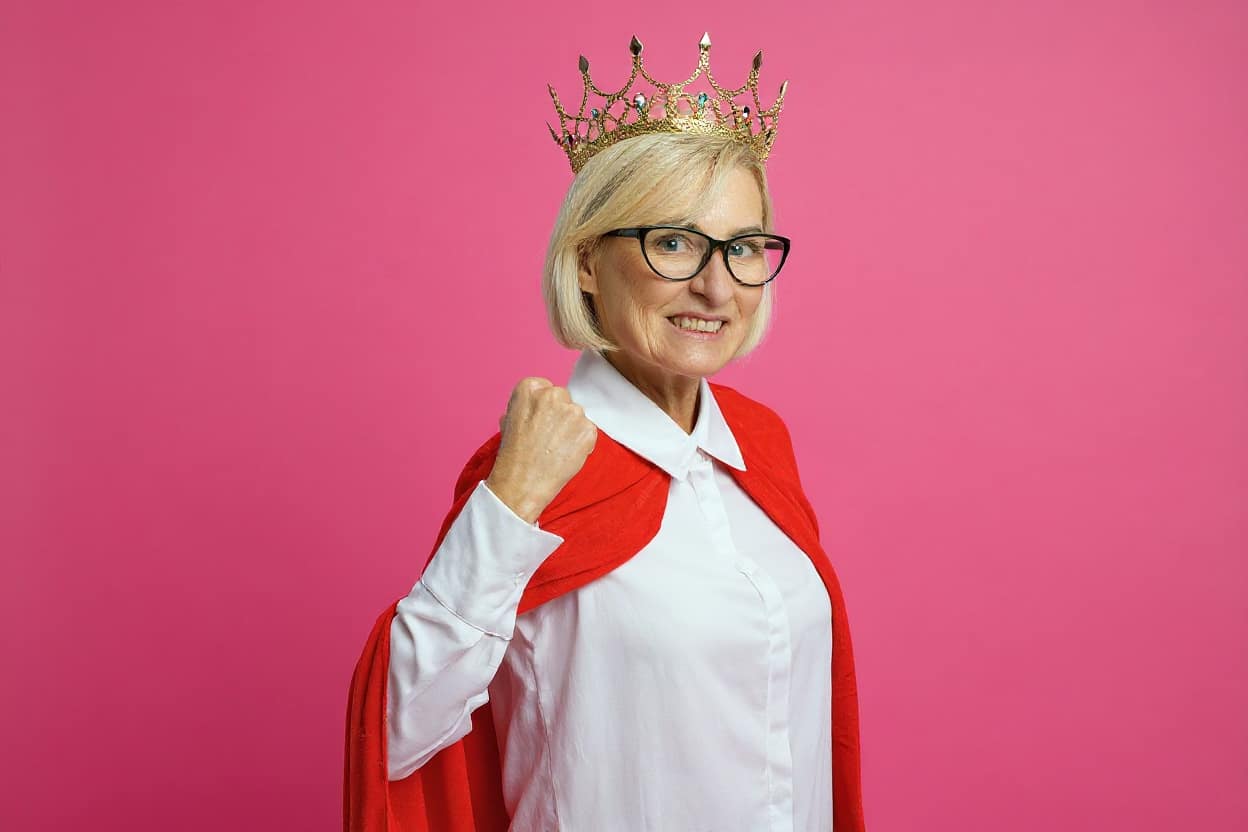
Recent findings reveal that the female brain undergoes a profound neural transformation during the years preceding menopause, also known as perimenopause—comparable to the changes seen in puberty (Mosconi et al., 2017; Mosconi, 2024 – The Menopause Brain). This neural transformation is driven by hormonal shifts that influence brain structure, function, and energy metabolism. The result? A plastic brain that adapts but is also temporarily more vulnerable to symptoms such as brain fog, mental fatigue, mood swings, and sleep disturbances. These brain symptoms are not signs of decline, but of a brain in transition: one that demands attention, understanding, and the right support. For women in this life stage, this is not just a period of challenges, but also one of new opportunities. They are nowadays increasingly referred to as “queenagers”, a word framing aging women in a more positive way (Mills, 2025). It is the natural precursor to the final phase of a woman’s life—also known as the Crone phase—which involves introspection and the sharing of wisdom with the wider community (Smit, 2024). Ensuring that women age healthily is therefore just as important for society as it is for the women themselves.
In this blog, being a queenager myself, I explore the mental vulnerabilities of perimenopause —from neurological complaints to the impact on pre-existing neurodivergence (such as ADHD)—and share evidence-based lifestyle strategies, based on the work of neuroscientist and nutritionist Lisa Mosconi. These strategies help women to not just cope, but thrive.
What if we viewed this phase not as a time of decline, but as an opportunity to consciously invest in women’s brain health?
The Vulnerable Queenager Brain
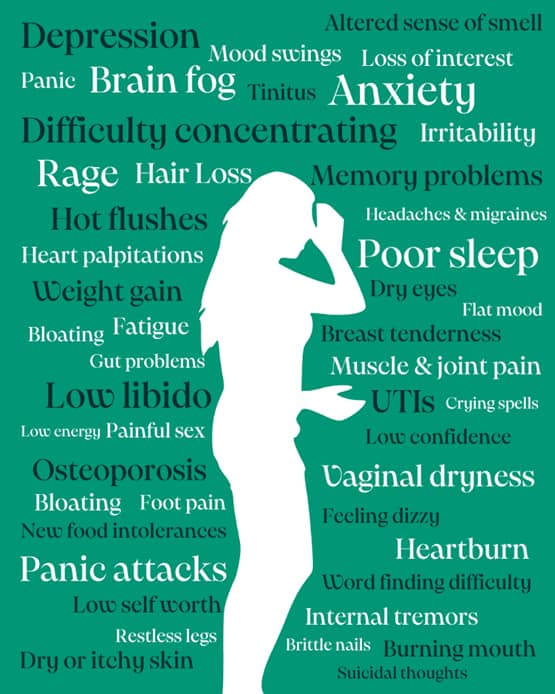
More than three-quarters of women experience neurological complaints during the menopausal transition (Mosconi, 2024 – The Menopause Brain); see my previous Mindwise post for further reading on these brain symptoms. In short, brain symptoms are caused by declining and fluctuating levels of the female sex hormones oestrogen (specifically oestradiol) and progesterone, which directly impact brain function. Common complaints include fatigue or low energy, brain fog (difficulties with concentration, memory, and word retrieval), mood disturbances, night sweats, and hot flushes. Also night sweats and hot flushes are brain symptoms, as they result from temporary dysregulation of the hypothalamus, the brain region responsible for temperature regulation.
So if you are a queenager like I am, and all of a sudden you turn forgetful, lose your stuff, miss appointments (or turn up a week too early, like I did…), and lose your focus, remember that this is absolutely normal and part of the transition that you are in. Don’t blame yourself but blame it on your queenager brain!
While these brain symptoms are often temporary, women’s brain health is particularly vulnerable during perimenopause (Mosconi, 2020 ).
Mosconi’s work primarily focuses on Alzheimer’s disease, a form of dementia that affects women at twice the rate of men. The risk of developing Alzheimer’s increases significantly during the menopausal transition, especially in women carrying the APOE4 gene (Mosconi, 2020). By age 45, (American) women have a 1 in 5 chance of developing Alzheimer’s, compared to 1 in 10 for men. Mosconi argues that Alzheimer’s disease is a disease of midlife, not of old age. Symptoms appear in old age, but the brain pathology starts in midlife and hits women harder than men. The book “The XX Brain” includes self-assessment tools to help women evaluate their personal risk not only for Alzheimer’s but also for other conditions that often emerge during perimenopause, such as diabetes and heart failure. While this may sound alarming, the empowering message of Mosconi’s work is that women can take control of their brain health through targeted lifestyle optimisation, significantly reducing these risks—more on this later.
Emerging research suggests that many other medical and mental vulnerabilities surface or worsen as women are entering menopause. A recent checklist of 84 common menopausal symptoms reveals that pre-existing physical and neurological conditions—such as asthma, migraines, epilepsy, and autoimmune disorders—often intensify during this phase. The same applies to mental health conditions, including depression, anxiety, eating disorders, addiction, and ADHD. I will highlight some striking examples of mental health conditions here. The first studies focusing on middle-aged women with ADHD reveal that ADHD symptoms worsen significantly during perimenopause. What’s more, the perimenopause symptoms start up to 10 years earlier in women with ADHD (Jakobsdottir et al., 2025), with perimenopausal symptom scores being highest at ages 35–39 years among women with ADHD (as compared to ages 45–49 years among women without ADHD). Another striking example is the elevated risk of psychosis in middle-aged women, a pattern not observed in men of the same age (Culbert et al., 2023). A final example is that unresolved childhood trauma frequently resurfaces during menopausal transition. The American “DREAMS study” found that women with a history of Adverse Childhood Experiences (ACEs) are particularly vulnerable to developing more severe menopausal complaints, even after accounting for other factors like anxiety and depression (Kapoor et al., 2020).
These findings underscore that the queenager years are a phase of heightened vulnerability—but there are many opportunities for awareness, intervention, and growth.
Lifestyle Optimisation for the Queenager Brain
The brain-related symptoms experienced by queenagers need to be seen as serious signals that lifestyle changes are needed. As early as 2018, Mosconi advocated for lifestyle prevention in her book Brain Food (Mosconi, 2018), emphasising the importance of protecting brain health in both women and men. This now appears to be especially important for queenagers, given the vulnerability of their brains during this stage of life. Continuing to push through with low brain energy—as many women do during perimenopause—can take a toll on long-term brain health. More and more studies confirm that perimenopausal women truly need lifestyle adjustments to preserve brain health and reduce the risk of cognitive decline (Mosconi, 2020 – The XX Brain; Mosconi, 2024 – The Menopause Brain).
In other words: during the first 40 years a woman’s body cares for the woman, but in the next 40 years a woman needs to care for her body.
Mosconi’s books outline key lifestyle recommendations (Mosconi, 2018; 2019; 2024), that are beneficial for everyone but essential for queenagers:
- A brain-healthy diet:
Start by drinking more (mineral) water daily—dehydration is a major cause of brain fog. Reduce refined sugars significantly and opt for slow-release carbohydrates, along with more plant-based proteins, healthy fats, herbs, and supplements.
- Regular physical activity:
Mosconi’s general message is: “Something is better than nothing, and less is more.” Moderate-intensity exercise is crucial, including strength training and activities that improve balance and flexibility—though individual needs vary. Then again, high-intensity workouts may sometimes be too taxing during this vulnerable phase, and drain scarce energy. The goal is to find the right exercise balance for supporting a healthy weight, metabolism, bone strength, injury prevention, better sleep, mood stability, and reducing hot flushes.
- Stress reduction:
Mind-body practices that combine mental focus, controlled breathing, and movement—such as yoga, mindfulness, and relaxation exercises—can help manage menopausal symptoms. Cognitive behavioural therapy (CBT) is also effective for dealing with the perimenopausal complaints, and framing them in a different way. While alternative therapies like acupuncture, hypnosis, and aromatherapy may offer relief, their scientific backing remains limited.
- Good sleep hygiene:
Beside sleeping in a cool room with breathable bedding and pyjamas (to ease hot flushes), queenagers should focus on extending sleep duration and improving sleep quality. This includes maintaining a consistent bedtime, a calming evening routine, and avoiding digital screens one hour before bed—blue light disrupts melatonin production, making it harder to fall asleep.
- Avoiding toxins and oestrogen disruptors:
Many environmental substances can disrupt hormonal balance. During perimenopause, when hormonal balance is delicate, it is especially important to minimise exposure by quitting smoking, avoiding plastic packaging (including plastic water bottles), using eco-friendly household and cosmetic products, steering clear of ultra-processed foods with artificial additives, and—if financially possible—choosing organic foods.
- Cultivating a positive mindset:
It’s vital to view the queenager (whether yourself, your mother, wife, or friend) not as being ill, but as navigating a natural life phase—one where brain-related symptoms are part of the process. Women can actively foster a more positive inner voice, humour, self-awareness, and emotional learning, for example by keeping a journal. Support from family, friends, and colleagues is key. Personally, I believe that embracing positive labels like “queenager” can also contribute to this shift in perspective.
Inform yourself:
For further reading on lifestyle optimization, see Mosconi’s book Brain Food (2018) or her website. In the Dutch-speaking world, the “Energieke Vrouwen Academie” (Energetic Women’s Academy) offers a wealth of information on lifestyle adjustments for women 40+, fully aligned with Mosconi’s recommendations, available in books and online.
Coaching and support for queenagers
Coaching opportunities for these kinds of lifestyle changes are rapidly expanding in (holistic) women’s clinics, GP practices, menopause consultants/coaches, and in orthomolecular therapy. The latter, while not uncontroversial, is a form of herbal medicine with growing scientific evidence, offering an alternative for women who prefer not to use conventional medications. Mosconi points out that herbs and plants—long used in traditional medicine—can significantly ease menopausal symptoms, such as black cohosh, chaste tree berry, ginseng and maca root, red clover, flaxseed, rhodiola, etcetera. Though these may seem like harmless supplements, they do have medicinal effects (and can interact with other medicines); therefore it is advisable to consult a medical doctor or a well-trained orthomolecular therapist before use.
In addition to lifestyle optimization, queenagers may consider Hormone Replacement Therapy (HRT). While HRT was previously prescribed only after menopausal transition in case of severe symptoms, these days perimenopausal women can bring it up with their GP or gynaecologist to determine whether HRT suits them (Mosconi, 2020; 2024). Newer options, such as bioidentical HRT (instead of synthetic hormones), are also available. Early research suggests HRT may help preserve brain health in European perimenopausal women, particularly those with the APOE4 gene —a group at higher risk for cognitive decline (Saleh et al., 2023).
Historically, women’s brain symptoms during perimenopause were dismissed in male-dominated medical practice as “vague complaints” or even as “whining women”.
Fortunately, this practice is (slowly) changing. While evidence-based treatments remain limited, new therapies directly targeting brain symptoms—such as Low-Dose Naltrexone (LDN)—are gaining clinical traction in holistic women’s clinics (Brighten, 2025). All in all, there are now real clinical possibilities to protect and improve women’s brain health, but science still has catching up to do.
The take-home message
For all queenagers: You are not a woman “in decline.” You are a queenager—a woman with life experience, wisdom, and the power to actively shape your brain health. Yes, your queenager brain is more vulnerable due to hormonal changes, but it is also incredibly adaptable. Every step you take—whether in nutrition, movement, sleep, or seeking support—is an investment in a more resilient version of yourself.
For partners, relatives, friends, and colleagues: Listen, support, and be proud of the woman who is not just surviving, but learning to thrive. Her experience is a natural transition, and your involvement can make all the difference.
References
*Non-scientific sources marked with an asterisk describe women’s lived experiences of (peri)menopause.
*Brighten, J. (2025). Low-Dose Naltrexone for Women’s Health: Benefits for Hormones, Autoimmunity, and Chronic Pain. https://drbrighten.com/low-dose-naltrexone/
Culbert, K.M., Thakkar, K.N., Klump, K.L. (2022). Risk for midlife psychosis in women: critical gaps and opportunities in exploring perimenopause and ovarian hormones as mechanisms of risk. Psychol Med, 52(9):1612-1620. doi:10.1017/S0033291722001143.
Jakobsdóttir Smári, U., Valdimarsdottir, U.A., Wynchank, D., de Jong. M., Aspelund, T., Hauksdottir, A., Thordardottir, E.B., Tomasson, G., Jakobsdottir, J., Lu, D., Nevriana, A., Larsson, H., Kooij, S., Zoega, H. (2025). Perimenopausal symptoms in women with and without ADHD: A population-based cohort study. Eur Psychiatry, 4;68(1):e133. doi:10.1192/j.eurpsy.2025.10101.
Kapoor, E., Okuno, M., Miller, V.M., Rocca, L.G., Rocca, W.A., Kling, J.M., Kuhle, C.L., Mara, K.C., Enders, F.T., Faubion, S.S. (2021). Association of adverse childhood experiences with menopausal symptoms: Results from the Data Registry on Experiences of Aging, Menopause and Sexuality (DREAMS). Maturitas, 143:209-215. doi:10.1016/j.maturitas.2020.10.006.
*Mills, Eleanor (2025, geraadpleegd op 22 January 2026). What is a queenager? https://noon.org.uk/what-is-a-queenager/
Mosconi, L. (2018). Brain food. The surprising science of eating for cognitive power. Avery.
Mosconi, L. (2020). The XX brain. The groundbreaking science empowering women to prevent dementia. CPI Group (UK)
Mosconi, L. (2024). The menopause brain. The new science empowering women to navigate midlife with knowledge and confidence. CPI Group (UK)
Mosconi, L., Berti, V., Quinn, C., McHugh, P., Petrongolo, G., Pupi, A., Osorio, R., Isaacson, R.S., Vallabhajosula, S., de Leon, M.J., Brinton, R.D. (2017). Altered Brain bioenergetics in the Perimenopauze to Menopauze transition: Implications for the increased Alzheimer’s risk in women. PLoS ONE 12(10): e0185926. https://doi.org/10.1371/journal.pone.0185926
*Newson, L. (2025, geraadpleegd op 29 augustus 2025). Revealed: frequency and severity of menopauze symptoms. https://www.drlouisenewson.co.uk/knowledge/revealed-frequency-and-severity-of-menopauze-symptoms
Saleh, R.N.M., Hornberger, M., Ritchie, C.W. et al. (2023). Hormone replacement therapy is associated with improved cognition and larger brain volumes in at-risk APOE4 women: results from the European Prevention of Alzheimer’s Disease (EPAD) cohort. Alz Res Therapy 15, 10. https://doi.org/10.1186/s13195-022-01121-5
*Smit, S. (2024). De tweede helft van je leven. De kracht en de wijsheid van de vrouw. Uitgeverij Lebowski.
Featuring image credits: free download and AI edit from magnific.com