Can Awe Break the Spell of Modernity?
|
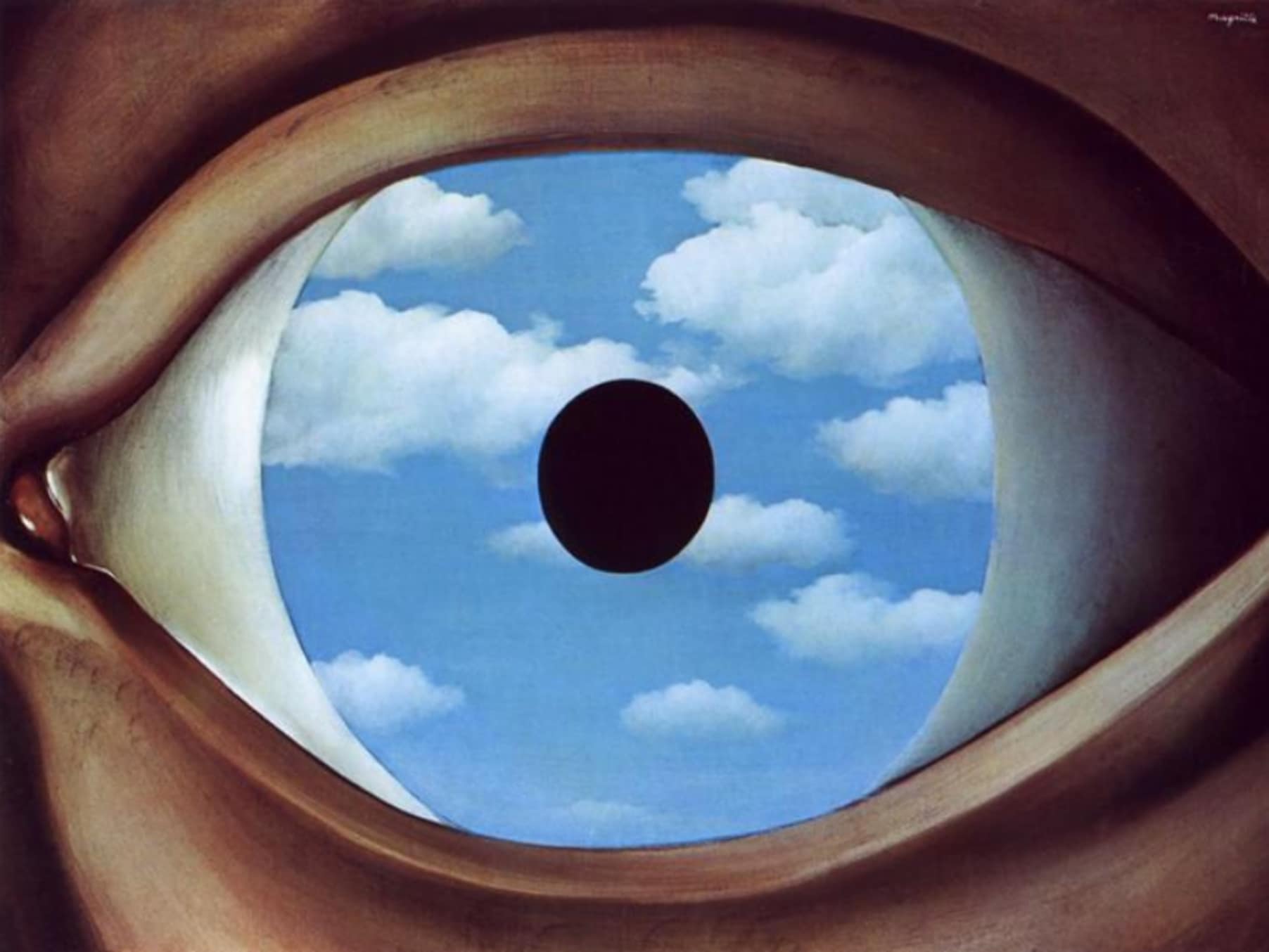
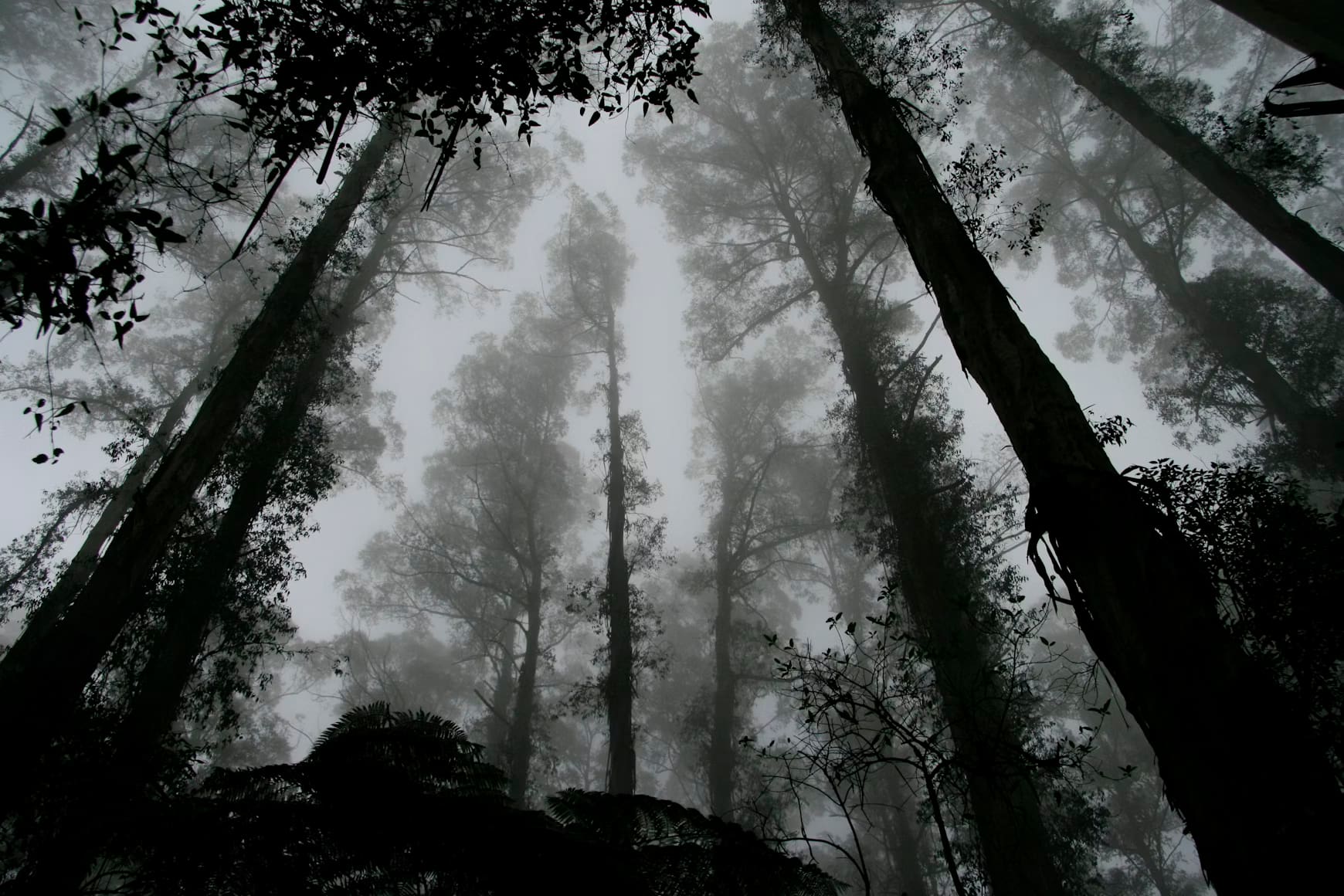
THE FLATTENING OF THE WORLD Modern people are surrounded by scientific and technological miracles and yet scarcely notice them. We carry devices that would have seemed magical to our ancestors, cross continents in hours, and summon vast libraries from our pockets. Yet for all this power, many of us move through a world that feels strangely flat: useful, measurable, manageable – but not especially alive. Part of what is at stake here is that knowing is not only one thing. We understand the difference between knowing facts about a person or city and actually knowing that person or city. A relational approach to nature is worth considering because factual description may leave out meaning and a sense of belonging in the world. Modernity, in this sense, is a cultural inheritance shaped by a mode of attending to the world that emphasizes factual description, analysis, prediction, and control – a mode exemplified in the extraordinary powers of science and technology. One way to glimpse this mode of attention is through the different ways in which nature can appear to us. A mountain, for instance, can appear as a resource to be mined or a landscape to be developed. But when it suddenly comes into view in its full scale, it may also strike us as more like a grand presence than a thing. In many premodern cultures, mountains, storms, forests, and rivers were encountered as such presences with which human beings stood in relation – a mode of experience modern people may still glimpse in moments of awe. Max Weber had a phrase for the fading of this relational mode of experience: the disenchantment of the world.1 The point is not that modernity is false, nor that science is some great mistake. There is a reason the modern style of attention became so influential: it helps us analyze, predict, and control, and it has enabled extraordinary achievements in medicine, engineering, and technology. Yet it is not the whole of human knowing. As Iain McGilchrist argues, although modern culture privileges an isolating, abstracting style of attention, we also rely constantly on intuition, felt sense, and tacit pattern recognition – participatory ways of knowing that were more explicitly cultivated in earlier cultures.2,3 WHEN THE WORLD SEEMS TO SPEAK The kind of relational experience just described has often been associated with animism. The word can sound strange, as though it means simply projecting human traits onto trees and rivers. But that is too simple. As some scholars use the term, animism names a way of encountering the world not as dead matter, but as something responsive, expressive, and met rather than merely used.4 A forest brings this out especially well. You may have had the experience of walking into the woods and, after a few minutes, sensing that the place is somehow addressing you – asking for your attention and a different way of being with it. David Wagoner’s poem “Lost” catches something of this: “And you must treat it as a powerful stranger / Must ask permission to know it and be known. / The forest breathes. Listen. It answers.” What matters here is not whether the forest speaks in any literal sense, but that a place can be encountered as more than an object.2,4 Does this mean we should return to a world in which science is no longer one of our primary ways of understanding reality? No. The claim is more modest: science remains indispensable, but it may not exhaust what counts as real, meaningful, or worth attending to. Philosophers such as Daniel Dennett have argued that we often understand complex systems by treating them as if they had intentions, because this can be an efficient strategy of prediction and explanation.5 Some psychologists likewise argue that animism is not simply a developmental error, but often a way of making a more-than-human world intelligible through relation rather than through detached observation alone.6 And when people attribute mind or presence to nature, they tend to feel greater empathy for it and show more willingness to protect it.7 Rather than replacing science with fantasy, this stance may help correct the fantasy that only a world of detached objects is real. HOW AWE OPENS US TO THE WORLD This is where awe becomes especially interesting. Awe arises when we encounter something vast that exceeds our habitual way of making sense of things – a mountain range, a night sky, or a powerful piece of music. In such moments, the world exceeds the frame through which we usually meet it. Something in us becomes receptive to aspects of reality that a more habitual or controlling stance can miss.8 We recently conducted research asking whether awe can loosen the modern habit of seeing a world of things and briefly open a more relational way of experiencing reality. Across two studies with community samples, participants watched a three-minute video designed to elicit awe, humor, or relaxation. Compared with those other conditions, participants in the awe condition reported a stronger sense that the world is alive and responsive – a more animistic mode of experience. Just as importantly, they also reported a greater sense of meaning in life, and mediation analyses suggested that this was due in part to the extent to which awe made the world seem more alive. One finding was particularly striking: awe increased trust in intuition. That matters because intuition is not only a quick way of judging; it is also part of how we grasp patterns, wholes, and meanings that detached description alone can miss. The findings therefore suggest that awe may briefly shift how people know the world: from detached objects toward living relation. And when the world is encountered in that more relational way, it may also become more meaningful. A DIFFERENT WAY OF ATTENDING These studies suggest that awe may be more than a pleasing aesthetic emotion; it may interrupt the cognitive habits by which the world becomes flat. Re-enchantment need not mean abandoning science. It means recognizing that science is powerful without being exhaustive. Whether the world appears as dead matter or living relation may depend partly on how we attend to it. A simple experiment suggests itself. The next time you are in a forest, under a night sky, or before a piece of music that arrests you, resist for a moment the impulse to reduce it to category, use, or explanation – or simply to let it pass by half-noticed. Attend instead with intuition, with felt sense, and with a willingness to open to more than you usually perceive. Meet what is before you as more than an object. See whether you can listen, ask permission to know, and sense whether anything answers. In this way, the opposite of disenchantment may not be superstition. It may be a more receptive way of attending. |
|
Image links: 1) https://unsplash.com/photos/looking-up-through-towering-trees-zy4UrUShHGk; 2) https://www.timwier.com/g2wyeepa8qccy72z2xf4jfnjgxhz0i References 1Weber, M. (1946). Science as a vocation. In H. H. Gerth & C. W. Mills (Eds. & Trans.), From Max Weber: Essays in sociology (pp. 129–156). Oxford University Press. 2McGilchrist, I. (2009). The master and his emissary: The divided brain and the making of the Western world. Yale University Press. 3Pacini, R., & Epstein, S. (1999). The relation of rational and experiential information processing styles to personality, basic beliefs, and the ratio-bias phenomenon. Journal of Personality and Social Psychology, 76(6), 972–987. 4Bird-David, N. (1999). “Animism” revisited: Personhood, environment, and relational epistemology. Current Anthropology, 40(S1), S67–S91. 5Dennett, D. C. (1987). The intentional stance. MIT Press. 6Airenti, G. (2018). The development of anthropomorphism in interaction: Intersubjectivity, imagination, and theory of mind. Frontiers in Psychology, 9, 2136. 7Tam, K.-P. (2019). Anthropomorphism of nature, environmental guilt, and pro-environmental behavior. Sustainability, 11(19), 5430. 8Keltner, D., & Haidt, J. (2003). Approaching awe, a moral, spiritual, and aesthetic emotion. Cognition & Emotion, 17(2), 297–314. |