

In September 2016, the Department of Psychology starts five new international master’s tracks. These tracks link psychological knowledge to particular fields of application, to prepare students in the best possible way for the job market in their respective fields. All tracks seem promising, but how do you pick the track that is right for you?
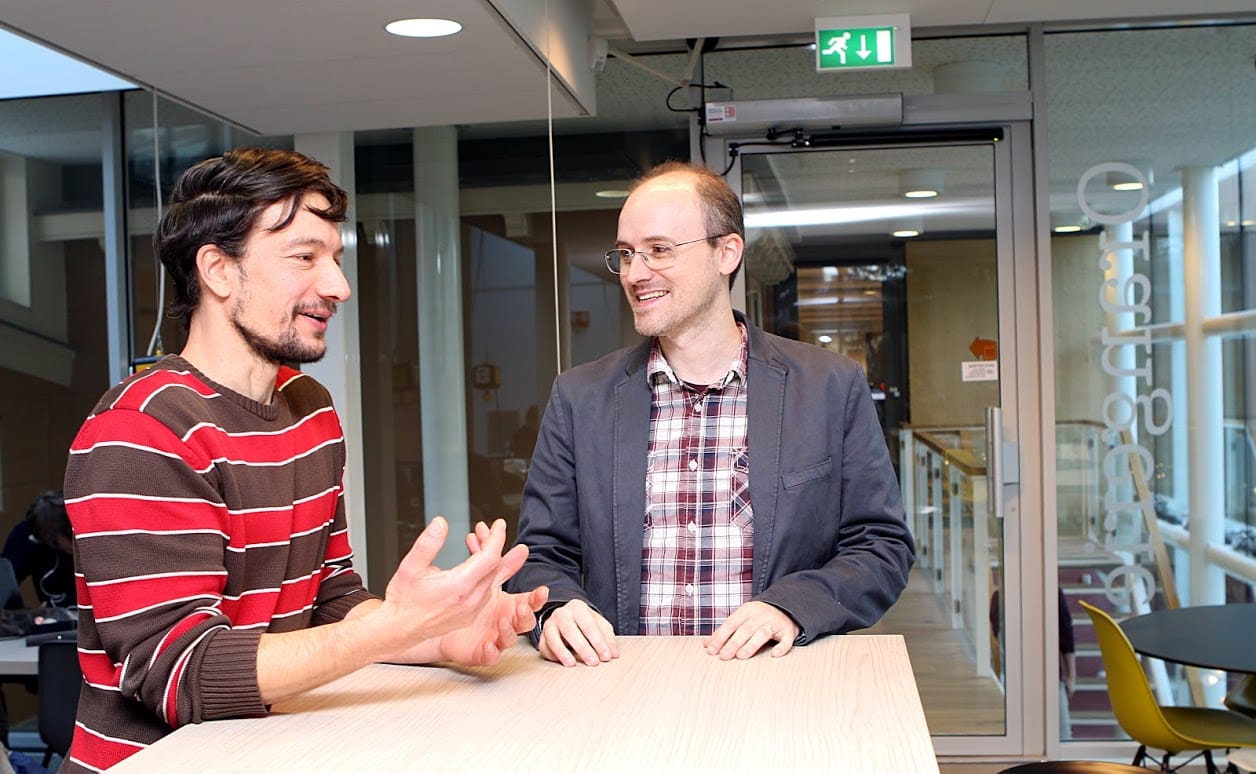
People tend to coordinate their actions, feelings, and thoughts with others in social situations. But how does this work? We asked two experts of our department, Dr. Ralf Cox (Developmental Psychology) and Dr. Pontus Leander (Organizational Psychology), who examine this intriguing topic from two different perspectives.
Employee deviance has costly consequences for organizations. This Thursday, October 22nd, Stacey Sanders defends her dissertation in which she sheds light on the question why employees deviate against abusive bosses but not against ethical ones.
Soccer players often display aggressive behavior when they are frustrated during matches. This aggressive behavior could possibly be explained by a loss of competency that goes along with goal-related frustration. However, pro-social behavior could also possibly be a way to restore that competence.
Do you find complex jobs motivating, or stifling? It appears that the answer depends on your personality.